
Science of Sound
Exploring how sound influences our mind and body
Where Sound Meets Science
Sound therapy sits between scientific observation and personal experience. While research helps explain how sound affects the nervous system and the body, the lived experience remains individual and subjective.
This approach respects both dimensions, without turning experience into belief or science into abstraction.
Truly eye-opening and deeply relaxing.
Miguel Z.
"
Nervous sistem
Sustained and predictable sound can support the regulation of the nervous system by encouraging a shift away from chronic stress responses. When external stimuli slow down, the body may naturally move toward a state of rest, reflected in changes in muscle tone, breathing, and overall tension.


Brainwaves
Sound environments can influence brain activity by supporting slower brainwave states such as alpha and theta. These states are commonly associated with relaxation, internal focus, and reduced mental noise. The effect does not require concentration or effort, as the response occurs naturally.
Effects on Body
Different frequencies of sound and vibrations have specific effects on the body and mind. Research and experience highlight the following:
1. Cardiovascular system
Low, deep frequencies (e.g., gongs, shamanic drums) help slow the heart rate, reduce blood pressure, and induce general relaxation. These sounds stimulate the parasympathetic nervous system, supporting regeneration and reducing stress hormones.
2. Respiratory system and relaxation
Slow, harmonious singing bowl sounds help regulate breathing patterns and deepen respiration. This improves oxygen intake and supports full-body relaxation.
3. Nervous system and brainwaves
Alpha (8–12 Hz) and theta (4–8 Hz) frequencies are associated with meditative and relaxed states. Sound therapy can reduce anxiety, enhance creativity, and improve focus.
4. Endocrine system
Certain frequencies (e.g., 40–432 Hz) stimulate endorphin and serotonin production, improving mood, reducing pain, and supporting stress relief. Relaxation also stimulates melatonin production, promoting better sleep quality.
5. Musculoskeletal system
Vibrations directly stimulate muscles and tissues, promoting relaxation.
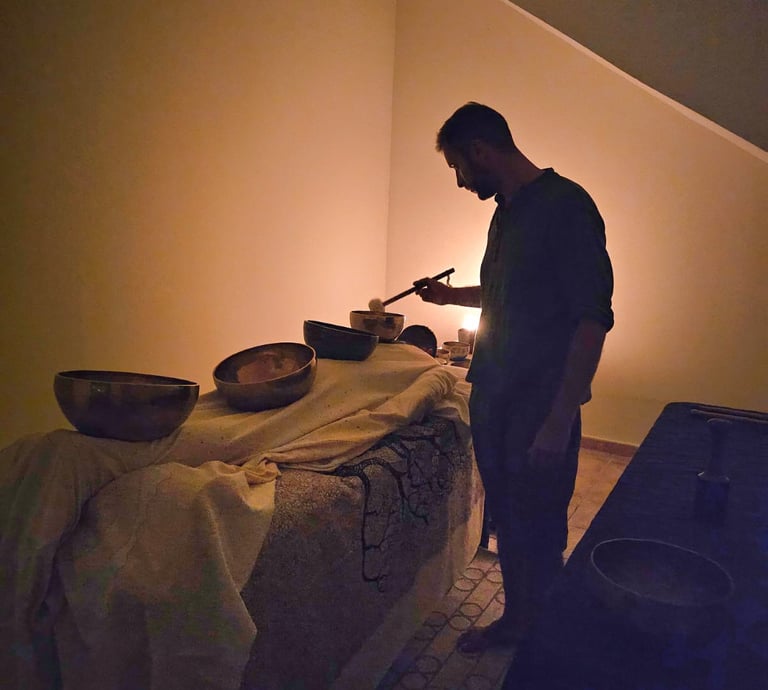
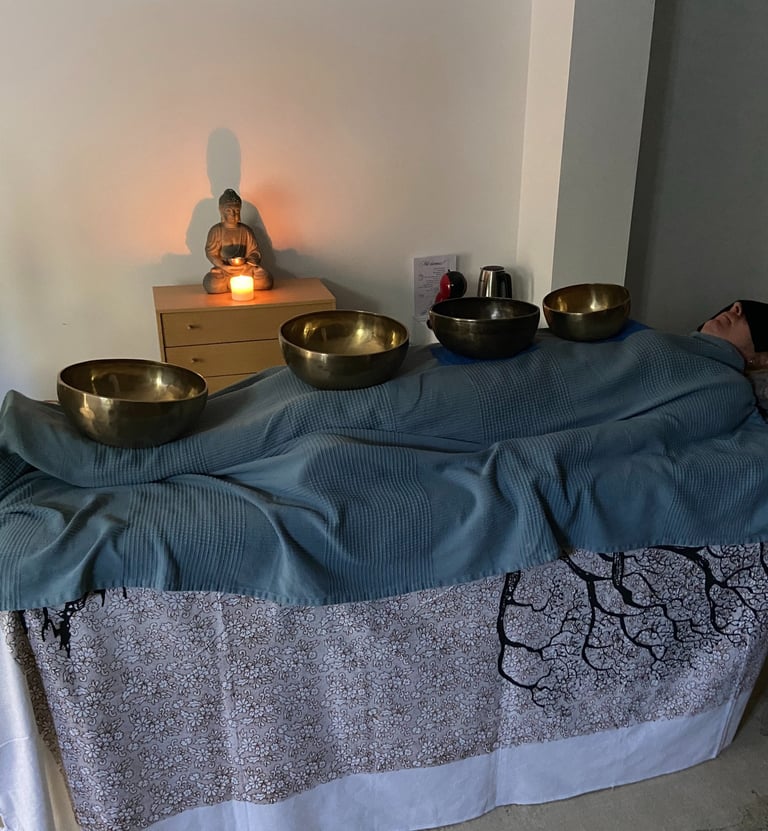
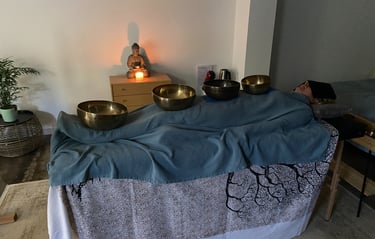
When singing bowls are placed on the body, vibrations are felt at the cellular level, improving circulation and energy flow.
6. Chakras and energy system
Each chakra resonates with specific frequency ranges; singing bowl vibrations help clear, energize, and harmonize the energy centers
Optimized energy flow supports natural self-healing processes


Vibration
Sound is perceived not only through hearing, but also physically through vibration. Low frequencies interact with tissues and the fascial system, creating sensations of resonance and grounding. This physical interaction helps explain why sound can be felt throughout the body.
Stress and Sleep
By supporting nervous system down-regulation, sound environments may contribute to reduced stress and improved rest. Rather than forcing sleep, sound creates conditions that allow the body to slow down, making it easier to transition into deeper states of relaxation and recovery.
Harmony Sound
Find your inner harmony
Phone
+36 20 669 8179
harmonysound© 2026. All rights reserved.

Home
The Method
The Science
Sessions
About Csaba
Rescources
Contact